Eye Hook
Eye Hook enquiries need a clear specification of the component, its mating interface and its intended duty. Lohar Forging & Engg. Works welcomes drawing-based and bulk enquiries from Mumbai. Use this guide to compare the technical requirements, prepare a useful quotation request and distinguish a standard reference from the exact product your assembly needs.
- Material
- SS / MS options
- Supply
- Bulk & custom
- Quote
- Within 24 hours
- Origin
- Mumbai, India
- Quote within 24hFast technical reply
- InspectedChecked before dispatch
- Export readyDocs & packing support
Technical Overview
01
Eye Hook — configuration and buying priorities
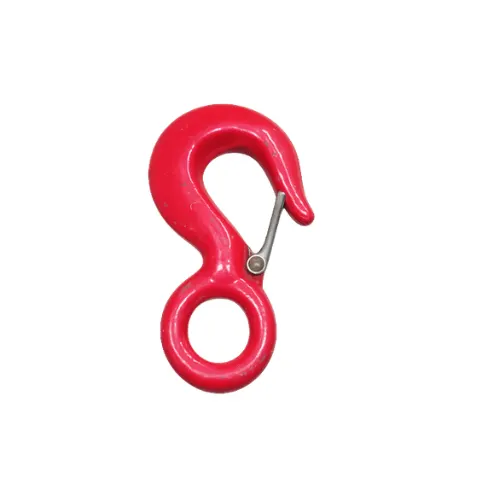
The Eye Hook attaches through a closed eye and presents a hook-shaped connection at the other end. Distinguish the attachment eye from the hook throat when recording dimensions. The eye must suit its mating pin or link, while the hook geometry must suit the connector in the intended operating position.
Ask Lohar to confirm the exact configuration, including any specified latch or retaining feature. The current product description does not provide a working load rating or a complete dimensional drawing. Those omissions matter most when the application involves lifting or another safety-critical load path.
The root eye-hook.php URL currently shares this product's title and points its canonical to the product URL. Keep one authoritative content body for the actual product instead of publishing a second near-identical guide. That avoids unnecessary duplication while you improve the technical detail on the product record.
02
Connection form and load path
A hook provides an open connection interface, but the attachment form and approved use determine how it belongs in an assembly. An eye-connected hook and a shank-mounted hook need different mounting details. Identify that attachment first, then check the throat, seating region and mating connector. A familiar hook shape does not establish lifting approval.
Describe how the connector sits during operation and whether movement could change that position. The surrounding assembly should not obstruct the intended connection or force contact at an unsuitable location. A latch, where the design includes one, does not replace the hook's approved load path or its rating. Request the exact instructions for the selected product.
For a replacement, collect the equipment drawing or manufacturer reference before measuring a worn hook. Wear and deformation can alter the opening or seating geometry. Use an old sample to explain the application, not as the sole dimensional specification. Ask the responsible engineer to review any change in mounting or connector arrangement.
03
Mounting, clearance and retention
Check the complete mounting interface. For a shank form, identify the end shape, thread where applicable, length and retention arrangement. For an eye form, identify the mating pin or link and available clearance. Include the surrounding equipment so the supplier can review interference rather than seeing only a loose component drawing.
Record the throat opening, internal geometry and external envelope using the approved drawing references. These dimensions answer different questions: the connector must enter, sit correctly and clear the adjacent structure. Do not choose a hook solely because its opening seems large enough.
Where the product includes a latch or other retention feature, specify the exact arrangement. Do not add a latch to an unrelated hook as proof of safety. Confirm the intended duty, environment and any required certification with the supplier before purchase. A technical quote should state what the supplied component includes.
04
Inspection and application limits
Look for visible distortion, cracks, severe corrosion, damage around the attachment and problems with any specified retention feature. If the hook's condition or identification raises doubt, remove it from the intended duty until the responsible person completes an assessment. Follow the approved inspection and retirement rules for the exact component.
Do not straighten a distorted hook or modify its mounting to create clearance. Such changes can alter the geometry and compromise the component. A replacement order should address the reason for the damage or interference, not simply reproduce the old part's appearance.
Lifting applications require documented approval and a competent assessment of the whole arrangement. This buying guide does not establish a hook's working load limit or authorise an operating method. Tell Lohar the actual duty and request the relevant product-specific documentation rather than relying on the term industrial hook.
05
Eye opening and connected-component envelope
Identify the eye's internal clearance and the external space it occupies. Include the actual mating link, pin or connector in the review. Passing a connector through an opening does not establish an approved operating position. Show the intended connection direction and surrounding obstructions in the drawing. If you need a special eye form, define its dimensions explicitly instead of relying on the catalogue photograph or a general round-eye description.
06
Pin interface and assembly access
Specify the pin diameter, the interface it enters and the intended retention arrangement. Check the connected component's thickness and the space needed to insert, remove and inspect the pin. Do not substitute another loose pin because it appears to fit. Keep the closure and retention requirements with the complete assembly description. If a drawing specifies a pin centre or bearing surface, use that reference when checking the mating part.
07
Length reference and installed envelope
State where each length begins and ends. Overall length, under-head length, plain length, thread length and centre distance can describe different features. Include the connected parts and any washers or spacers that influence the assembly. A dimension without its reference points can produce two reasonable but incompatible interpretations. If you provide a sample, identify wear and clarify which original dimensions the supplier must reproduce.
08
Material identification and documentation
State the actual material requirement rather than relying on an abbreviation. Separate the material designation from mechanical properties and any application-specific rating. If the project needs a certificate or traceability record, identify the required document at enquiry stage. Ask which records Lohar can provide for the quoted component. Keep every public grade or performance claim aligned with that confirmation; a generic material field does not establish all possible grade options.
09
Finished-surface and coating requirements
Specify the required process or project reference where the finish matters to service. A colour or bright appearance cannot establish chemistry, thickness, corrosion life or compliance. Consider how the finish interacts with threads and connection surfaces. Ask Lohar to confirm the actual process and any records included in the quote. Do not turn a broad catalogue finish description into a quantified coating claim without batch or process evidence.
10
A drawing that makes the quotation useful
A useful enquiry gives the supplier enough information to distinguish the required component from a similar catalogue item. Send an approved drawing where you have one. Include the drawing revision, units, quantity and any mating-part reference. If you start from a sample, explain which dimensions matter to fit and which features merely reflect an old manufacturing choice.
Identify tolerances through the drawing or relevant specification rather than asking for a general close fit. Mark critical interfaces clearly. A dimension that controls a pin fit needs a different discussion from a noncritical external envelope. Ask the supplier to flag any unclear reference point before agreeing the manufacturing description.
For a repeat order, reference the previously approved drawing and revision. Do not rely only on a product name from an earlier invoice. Changes in the machine, material or finish may require a new technical review. A short, precise purchase description with an approved attachment works better than a long list of unverified catalogue claims.
11
Documentation, samples and acceptance checks
Decide what you need to verify at receipt before placing the order. The acceptance plan may include dimensional checks, thread fit, material identification, finish requirements or application-specific documents. Tell Lohar which checks and records the project requires so the quotation can confirm the scope. Do not assume that a generic catalogue entry includes every possible certificate.
Agree how the drawing, sample and inspection records identify the ordered variant. Keep the product description consistent across the enquiry, quotation and purchase order. If a supplied sample controls the interface, record its approval and any agreed differences. This helps purchasing, production and maintenance teams review the same requirement.
When the application demands traceability, request the relevant batch or component identification and confirm what documentation accompanies supply. For a safety-critical duty, the responsible engineer or competent person must define the acceptance criteria. A marketing description, surface appearance or five-star rating cannot replace that technical review.
12
Quantity, packaging and delivery information
State the total quantity and explain whether you need one project batch, repeat releases or a trial quantity before a larger order. Those arrangements can affect production planning and the quotation. Share the required delivery destination and the target date, then ask Lohar to confirm the actual schedule. Avoid treating a generic response-time statement as a guaranteed manufacturing lead time.
For domestic or export enquiries, identify any packaging, marking or document requirements in advance. Parts that look similar may need separate labels or packing groups for assembly. If the project uses several drawing revisions, make the required quantities clear for each one. Protect thread and connection surfaces according to the agreed packing specification.
Ask the quotation to identify the component scope, material, finish, documents and agreed delivery arrangement. Compare quotations on those details instead of price alone. A lower-priced item with an unclear interface or missing required records can create a more expensive installation problem.
13
Before you approve the order
Review the quotation against the approved drawing line by line. Confirm the actual variant, material, finish, dimensional references, supplied accessories and required documents. Ask the supplier to identify any exception clearly. A familiar product name can hide an important difference in head geometry, mounting length, closure arrangement or included hardware.
If the equipment's operating requirement changes, return to the technical specification rather than treating the old order as automatic approval. A new environment, mating component or load arrangement can change the selection. Keep the maintenance or design team involved where the joint or connection affects safety or reliable operation.
On receipt, inspect the supplied parts under the agreed acceptance plan before installation. Check identification and documents along with the relevant dimensions and interfaces. Escalate a mismatch instead of modifying the component to force a fit. That approach makes the purchasing record useful to the next team member and helps prevent the same uncertainty on a repeat order.
| Feature to confirm | Units / reference | What the enquiry should state |
|---|---|---|
| eye opening | Drawing dimensions in mm; thread designation/pitch where relevant | Provide the approved drawing or supplier confirmation; no stock range claimed |
| throat opening | Drawing dimensions in mm; thread designation/pitch where relevant | Provide the approved drawing or supplier confirmation; no stock range claimed |
| latch configuration | Drawing-defined feature or approved instruction | Provide the approved drawing or supplier confirmation; no stock range claimed |
| section dimensions | Drawing dimensions in mm; thread designation/pitch where relevant | Provide the approved drawing or supplier confirmation; no stock range claimed |
| rated-use evidence | Drawing dimensions in mm; thread designation/pitch where relevant | Provide the approved drawing or supplier confirmation; no stock range claimed |
This table defines RFQ requirements. It is not a Lohar available-size chart or a load-rating table.
14
Related resources and quotation
Applications
Need a quote?
Tell us your size, material & quantity.
- Evaluate the actual eye hook interface against the equipment drawing
- Specify material and finish for the documented operating environment
- Confirm safety-critical use through approved product and system instructions
- Separate replacement, trial and repeat-order requirements in the enquiry
FAQ
Frequently Asked Questions
What should I include in a eye hook enquiry?
Provide the approved drawing or equipment reference, the required quantity and delivery destination. Identify eye opening, throat opening, latch configuration, section dimensions, rated-use evidence. State the intended duty and any project-standard or documentation requirement. Ask Lohar to confirm the exact scope rather than relying on the product name alone.
Can I order custom eye hook dimensions?
Send the dimensions, reference points, material, finish and quantity for feasibility review. A custom enquiry does not establish that every size or grade is available. Ask the quotation to identify the approved configuration, any exceptions and the actual manufacturing and delivery arrangement.
Does this page confirm a load rating or tightening torque?
No. Use the exact approved product or equipment instructions for load, installation and tightening limits. This page does not provide a verified numeric rating or torque for this record. Do not apply a competitor table or a value based only on nominal diameter.
How do I check compatibility with an existing assembly?
Identify the mating components and compare their interfaces with the approved drawing. Check the relevant thread, opening, head, pin, shaft or mounting dimensions as the product requires. Use a sample for context, but resolve wear or damage before treating its measurements as the specification.
Which material documents should I request?
Request the material identification and any project-specific certificates or traceability records before placing the order. Confirm which documents Lohar can provide for the quoted batch. A generic mild-steel or stainless-steel catalogue label does not establish a particular grade, mechanical class or certification.
Do these technical references list Lohar stock sizes?
No. A reference table explains a measurement or thread designation. The approved drawing and supplier confirmation define the actual product dimensions and supply scope. Keep those two roles separate when preparing the purchase order.
More Eye Hook
Bolts
Bolts is manufactured for industrial fastening and lifting applications, with practical strength, repeatabl...
View product
Eye & Eye Turn Buckle
Eye and Eye Turnbuckle enquiries need a clear specification of the component, its mating interface and its ...
View product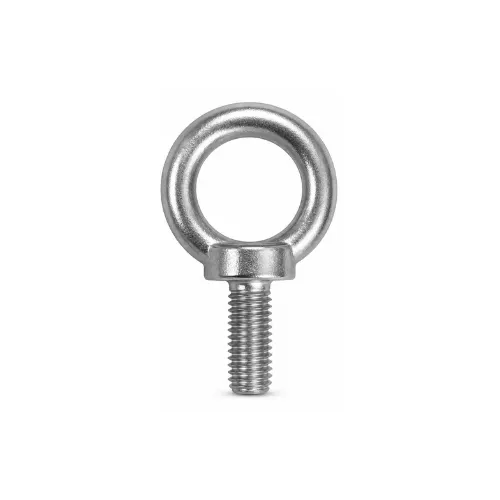
Eye Bolt
Eye Bolt enquiries need a clear specification of the component, its mating interface and its intended duty....
View product
Fully Threaded Stud
Fully Threaded Stud enquiries need a clear specification of the component, its mating interface and its int...
View product