
Skip to content
Export Enquiry
Lohar Forging & Engg. Works

Forged Hardware

Fasteners, lifting and rigging products made in Mumbai.

Mumbai manufacturer · Drawing-based enquiries

Stud Bolt Manufacturer in India

Lohar Forging & Engg. Works is a stud bolt manufacturer in India, supplying industrial threaded fasteners for flange joints, machinery, piping systems, fabricated equipment, plant maintenance, OEM requirements and project procurement.

IEC Certified Exporter 17+ Years Forging SS & MS Grades
Stud Bolt Manufacturer in India - Lohar Forging Mumbai

Manufactured in Mumbai, our published stud bolt range includes fully threaded studs, tap-end studs, double-end studs, reduced-shank studs and related threaded configurations in stainless steel and mild steel.

Current published specifications cover M6 to M200, with matched nuts available and ASTM, DIN and custom requirements open for discussion according to the exact application.

Stud bolts are specification-driven components. Diameter alone is not enough to define the correct product. Length, thread pitch, material, grade, configuration, matching nuts, finish and applicable standard can all influence whether the stud suits the intended joint.

For standard, project-specific or custom stud bolt requirements, send us the required dimensions, material, quantity, drawing or standard and delivery destination for review.

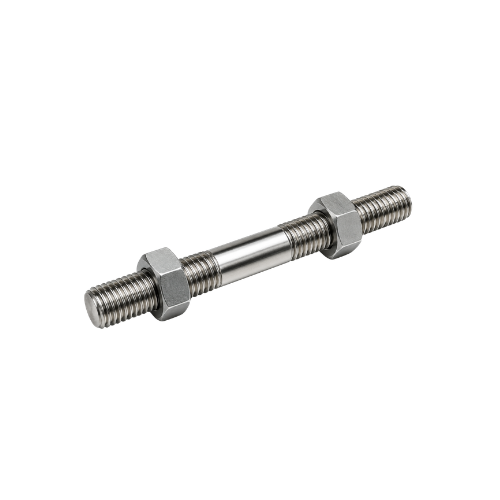
Stud bolt with matched nuts product example from Lohar Forging
Stud bolt with nuts example. Confirm configuration and matching hardware before ordering.

Industrial Stud Bolts for Flanges, Machinery and Engineering Applications

A stud bolt is a threaded fastening component generally used with nuts or threaded mating parts to create a mechanical joint.

Unlike a conventional headed bolt, many stud configurations do not have an integral bolt head. Depending on the design, a stud may be threaded across its entire length or have threaded sections at one or both ends.

This makes stud bolts suitable for a wide range of industrial assemblies where controlled threaded engagement, accessibility or installation configuration matters.

Common applications include flanged pipe joints, process equipment, machinery, fabricated systems, maintenance assemblies and project-specific fastening.

The correct stud should be selected from the engineering requirement rather than from appearance alone.

A procurement specification may need to define:

  • nominal diameter
  • overall length
  • threaded length
  • thread pitch
  • stud configuration
  • material
  • grade
  • required nuts
  • finish
  • manufacturing standard
  • inspection requirements

Providing these details reduces assumptions and makes quotation and manufacturing review more accurate.

Stud Bolt Specifications

Lohar Forging's current published stud bolt range includes:

SpecificationPublished Range
ProductIndustrial stud bolts
MaterialStainless steel / Mild steel
Size rangeM6–M200
ConfigurationsFull, tap-end, double-end, reduced-shank, U, eye and dowel
NutsMatching nuts can be supplied
StandardsASTM / DIN / custom
Manufacturing locationMumbai, India
Order typeStandard, bulk and custom requirements

These specifications should be treated as category-level capabilities rather than a promise that every possible material, type and size combination is automatically available.

For accurate availability, provide the complete requirement at enquiry stage.

Types of Stud Bolts We Manufacture

Stud configuration affects how the fastener engages with the assembly.

The main stud bolt types relevant to industrial procurement include fully threaded studs, double-end studs, tap-end studs and reduced-shank studs.

Fully Threaded Stud Bolts

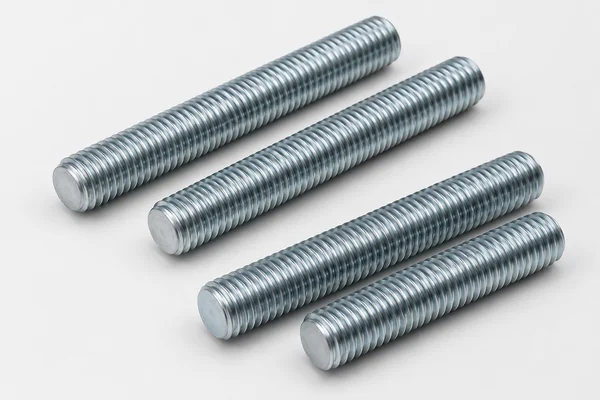
A fully threaded stud has threading extending across substantially the entire fastener length.

This configuration allows nuts or mating components to engage along a large portion of the stud, making it practical for many flange, machinery and general fastening applications.

Fully threaded studs can be useful where adjustment is required during installation or where the joint geometry does not require a defined plain shank section.

For quotation, specify the required diameter, overall length, thread pitch, material, grade, nuts and standard.

Double-End Stud Bolts

A double-end stud has threaded sections at both ends, with a central shank between them.

One threaded end may engage with a tapped component while the other receives a nut, or both threaded ends may serve different parts of the assembly depending on the design.

This configuration is widely used in machinery, equipment assembly and engineering applications where a conventional headed bolt is not suitable.

Thread lengths at each end should be specified when they are critical.

A drawing is particularly useful where the two threaded portions differ in length or thread specification.

Tap-End Stud Bolts

Tap-end studs are designed with one end intended to engage into a tapped hole and another end that accepts a nut or mating component.

These studs are often used in equipment where one side of the joint forms part of the machinery or housing itself.

Correct threaded engagement is important because the stud must fit the tapped component properly.

For tap-end stud enquiries, specify the thread required at each end, engagement length, overall length, material, grade and quantity.

Where the design is equipment-specific, provide the drawing rather than relying on a generic stud description.

Reduced-Shank Stud Bolts

A reduced-shank stud has a centre section with a smaller diameter than the threaded ends.

This geometry may be specified where the joint design requires a particular elongation or load behaviour.

Lohar's existing Stud Bolt page notes that a reduced shank can allow the stud to stretch under tension and help produce more consistent bolt loading in critical flanged joints.

Reduced-shank studs should therefore be manufactured against clearly defined dimensions rather than substituted for standard fully threaded studs without engineering approval.

For critical joints, provide the required dimensions, material, grade, operating specification and applicable drawing.

Product examples

Illustrative product images; exact dimensions, material and availability are confirmed against the enquiry.

Stud Bolts With Nuts

Many industrial applications require the stud and nuts to function together as a fastening assembly.

Lohar Forging can supply matched nuts with its stud bolt requirements.

Ordering the stud and nuts together can simplify procurement by allowing the required thread compatibility to be considered as one supply package.

However, the phrase “matching nuts” should still be supported by a complete specification.

Where applicable, buyers should specify:

  • nut type
  • material
  • grade
  • thread pitch
  • quantity per stud
  • finish
  • applicable standard

A high-strength stud should not automatically be paired with an unspecified nut merely because the thread fits.

The complete bolted joint needs to follow the engineering or project specification.

Materials for Industrial Stud Bolts

Material selection influences corrosion resistance, mechanical performance, environmental suitability and cost.

Lohar Forging's current stud bolt range lists stainless steel and mild steel as its primary material options.

Stainless Steel Stud Bolts

Stainless steel studs are commonly considered where corrosion resistance is an important selection requirement.

Potential applications include outdoor installations, process environments, marine-related equipment and assemblies regularly exposed to moisture.

However, stainless steel is not one universal material.

If the project requires a specific stainless grade, that grade should be stated in the RFQ.

Do not substitute one stainless grade for another solely because the dimensions are identical.

Mild Steel Stud Bolts

Mild steel studs are widely used in general engineering, fabrication and industrial fastening where their properties suit the application.

Finish and environmental exposure should be considered along with the base material.

If corrosion protection is required, specify the expected surface treatment or finish rather than leaving it undefined.

Stud Bolts for Flange Connections

Flanged joints are one of the most important industrial applications for stud bolts.

Studs pass through the flange bolt holes and use nuts to clamp the flange assembly together.

The resulting joint depends on more than stud diameter.

Flange specification, number of bolt holes, joint thickness, gasket arrangement, stud length, material, grade, thread and tightening procedure can all affect the assembly.

Lohar's Industries page specifically identifies stud bolts and nuts for flanged joints in oil, gas and process applications, where clamp load and material traceability can be important.

For flange-related enquiries, provide the flange or project specification wherever possible.

A useful RFQ may include:

Flange requirement + stud diameter + stud length + thread + material/grade + number/type of nuts + quantity + standard.

Do not estimate stud length solely from pipe diameter.

The actual joint stack-up needs to be considered.

Fully Threaded Stud vs Double-End Stud

Fully threaded and double-end studs can look similar at first glance, but their geometry serves different installation requirements.

A fully threaded stud offers thread engagement across most or all of its usable length.

A double-end stud provides defined threaded sections separated by an unthreaded centre portion.

Fully threaded studs can be suitable for many bolted flange and general industrial connections.

Double-end studs may be more appropriate where controlled threaded engagement into equipment or a defined central shank is required.

Neither style should automatically replace the other.

Use the configuration shown on the approved equipment drawing, project standard or maintenance specification.

Standard and Custom Stud Bolts

Industrial studs may be manufactured against established dimensional or material standards or against project-specific drawings.

Lohar Forging's current category page lists ASTM, DIN and custom requirements.

Where a standard applies, send its exact designation together with the required dimensions, material and grade.

Do not send only “ASTM stud” or “DIN stud,” because those families contain multiple specifications and different technical requirements.

Custom studs become useful where catalogue dimensions do not fit the equipment.

Examples include unusual overall lengths, different thread lengths on each end, special diameters, replacement components for older machinery and OEM-specific threaded parts.

Lohar supports custom sizes, threads and configurations for project and OEM orders and states that buyers can submit drawings or samples for review.

A controlled drawing is preferable whenever the component contains several critical dimensions.

Stud Bolt Manufacturing and Quality Control

Industrial stud bolt quality depends on material identification, dimensional control and thread accuracy.

A stud may look acceptable externally but still create installation problems if its pitch, thread form, diameter or length does not match the mating components.

Lohar Forging states that its fasteners are manufactured in-house in Mazgaon, Mumbai, and that its general production can involve forging, machining and threading depending on the component.

For stud bolt requirements, the first step should be confirmation of product type, size, material, thread, nuts, finish and quantity.

The component can then be produced according to the agreed configuration and checked against the required dimensions.

Thread quality is particularly important because both ends of the assembly must engage correctly with the nut or tapped component.

For custom production, drawings and approved samples provide a practical inspection reference.

If your project needs material certificates, inspection reports, specific testing or third-party inspection, state this before order confirmation so the manufacturer can verify what can be provided.

How to Select the Right Stud Bolt

Start with the assembly rather than simply copying the nominal diameter.

First, determine where the stud will be used.

Is it for a flange, machinery housing, structural assembly, pipe support or custom equipment?

Then identify the required stud configuration.

A fully threaded stud, tap-end stud, double-end stud and reduced-shank stud perform different installation roles.

Confirm the diameter and overall length from the approved drawing or equipment requirement.

Next, define the thread.

Thread diameter alone is not sufficient. Pitch and any different thread requirements at each end need to be identified.

Specify the material and grade according to the design requirement.

Then identify the nuts required with the stud.

Finally, include any manufacturing standard, coating, inspection or documentation requirement.

For flange applications, include the relevant flange or project specification wherever available.

This creates a far more reliable enquiry than simply requesting a “heavy-duty stud bolt.”

Industrial Applications of Stud Bolts

Oil, Gas and Process Equipment

Stud bolts are widely associated with flanged piping and process equipment.

These applications often place greater emphasis on correct material, grade, thread, joint dimensions and project documentation.

Power Plants

Power-generation equipment and plant maintenance may require studs for pipework, machinery and equipment connections.

Repeatable dimensions are particularly useful for scheduled maintenance and replacement requirements.

Heavy Engineering

Large machines, fabricated equipment and industrial assemblies may use double-end or tap-end studs where a headed fastener is unsuitable.

Petrochemical and Chemical Equipment

Process installations can expose fasteners to demanding operating and environmental conditions.

Material selection should therefore follow the project or equipment specification.

Marine and Shipping

Where stud bolts are used around marine equipment or exposed environments, corrosion resistance may become an important material-selection factor.

General Engineering and Fabrication

Fabricators and workshops use studs for machinery, custom assemblies, pipework and replacement fastening components.

Custom manufacturing can be valuable where the required dimensions are not part of a standard stocked range.

OEM Manufacturing

OEM buyers may need repeat batches manufactured according to their controlled drawings.

Once the required specification is approved, maintaining consistent drawings and revision control can make repeat procurement easier.

Custom Stud Bolt Manufacturer in India

Custom stud bolts are required when standard dimensions or configurations do not match the equipment.

Lohar Forging supports drawing- and sample-based manufacturing for custom threaded fasteners.

Typical custom variables can include:

  • overall length
  • thread length
  • different end configurations
  • diameter
  • pitch
  • material
  • grade
  • reduced shank dimensions
  • matched nuts
  • project-specific geometry

Where possible, provide a technical drawing rather than relying only on a photograph.

Photographs help identify general shape but normally cannot confirm thread pitch, material grade, tolerances or mechanical requirements.

If a physical sample is supplied, material and performance requirements should still be communicated separately.

Stud Bolt Manufacturer for Bulk Industrial Supply

Industrial buyers often need more than one-off components.

A plant shutdown, EPC package, fabrication project, OEM production run or distributor requirement may involve repeated or bulk quantities.

Lohar Forging supports bulk domestic and export enquiries from its Mumbai operation.

For repeat orders, reference the approved drawing, previous specification or earlier order wherever available.

That helps ensure the new requirement is compared with the previously accepted configuration.

For international enquiries, provide the destination and any required export packing or documentation.

Lohar currently states that it holds Government of India IEC 0315056487 and supplies export requirements.

Why Source Stud Bolts From Lohar Forging?

Lohar Forging manufactures industrial fasteners from Mazgaon, Mumbai and supports both standard and custom requirements.

Its current published stud bolt range covers M6 to M200 with multiple configurations, including fully threaded, tap-end, double-end and reduced-shank studs.

Stainless steel and mild steel options are available within the current category, and matched nuts can be supplied.

The company also accepts custom size, thread and configuration enquiries based on project drawings or samples.

For buyers, this allows the procurement discussion to begin with the actual joint and specification rather than being limited to a single catalogue configuration.

Information Needed for a Stud Bolt Quotation

A complete RFQ should normally identify the stud type, diameter, overall length, thread pitch, thread length, material, grade, nuts, quantity and delivery destination.

Include the applicable ASTM, DIN or other specification where one is required.

For flange applications, attach the flange/project specification where possible.

For custom studs, attach the approved drawing.

For replacement components, provide the existing specification or sample together with any known material and grade information.

If inspection documentation, material certification, marking, special packaging or third-party inspection is required, mention it before quotation.

Complete information helps the manufacturer reduce assumptions and evaluate feasibility more accurately.

Technical references

For property-class research, see ISO 898-1 for carbon/alloy-steel bolts and studs and ISO 3506-1 for stainless-steel fasteners. These are engineering references, not claims that every listed product, size or configuration conforms to either standard. Confirm the applicable edition, dimensional scope and test documentation for your order.

Frequently Asked Questions

What is a stud bolt?+

A stud bolt is a threaded fastener typically used with nuts or threaded mating components. It may be fully threaded or have threaded sections at one or both ends depending on the design.

Is Lohar Forging a stud bolt manufacturer in India?+

Yes. Lohar Forging & Engg. Works manufactures industrial fasteners in Mazgaon, Mumbai and supplies standard, bulk and custom stud bolt requirements.

What types of stud bolts do you manufacture?+

The current range includes fully threaded, tap-end, double-end and reduced-shank studs, together with U, eye and dowel-related configurations.

What stud bolt sizes are available?+

Lohar Forging's published Stud Bolt category currently lists an M6 to M200 size range. Exact availability depends on configuration, material, grade, thread and quantity.

Do you supply studs with nuts?+

Yes. Matching nuts can be supplied with stud bolt requirements.

Do you manufacture fully threaded stud bolts?+

Yes. Fully threaded studs are part of the existing product range.

Do you manufacture double-end stud bolts?+

Yes. Double-end studs are included in the current published range.

What is a tap-end stud bolt?+

A tap-end stud has one end intended to engage into a tapped component while the opposite threaded section is generally used with a nut or mating part.

What is a reduced-shank stud bolt?+

A reduced-shank stud has a centre section smaller in diameter than its threaded ends. It may be specified where the joint design requires particular elongation or loading characteristics.

Can stud bolts be used for flange joints?+

Yes. Stud bolts are widely used in bolted flange connections. The correct stud diameter, length, material, grade, thread and nuts should be selected from the flange or project specification.

Are stainless steel stud bolts available?+

Yes. Stainless steel is listed as one of Lohar Forging's current stud bolt material options. Specify the exact grade where required.

Are mild steel stud bolts available?+

Yes. Mild steel is also included in the current published category.

Can you manufacture custom stud bolts?+

Yes. Custom sizes, threads and configurations can be discussed for project and OEM orders. Send a drawing or sample for review.

Can you manufacture studs according to ASTM or DIN requirements?+

Lohar Forging's current Stud Bolt page lists ASTM, DIN and custom requirements. Send the exact specification so capability can be confirmed for your particular product.

Do you supply bulk quantities?+

Yes. Bulk domestic and export requirements can be quoted based on specification and quantity.

Request a Quote From a Stud Bolt Manufacturer in India

The correct stud bolt is defined by more than diameter and length.

Stud configuration, thread pitch, material, grade, nuts, joint geometry and applicable standard all affect whether the fastener is suitable for the assembly.

Lohar Forging & Engg. Works manufactures stud bolts and related threaded fasteners in Mumbai for industrial, project, maintenance and OEM requirements.

Our published category includes stainless steel and mild steel studs from M6 to M200, multiple stud configurations, matched nuts and support for ASTM, DIN and custom requirements.

For standard products, send your specification and quantity.

For custom requirements, attach the drawing or provide a sample together with the material and application details.

Share your stud type, diameter, length, thread, material, grade, nuts, quantity and destination to request a quotation from Lohar Forging.

Quick Summary

Lohar Forging manufactures stud bolts in Mumbai for flanges, machinery and project orders. Its published category includes M6–M200 and fully threaded, tap-end, double-end and reduced-shank configurations, subject to specification review.

Key Takeaways

  • Stud configuration and thread engagement must match the approved joint.
  • The published M6–M200 range is category-level, not every possible combination.
  • Matched nuts should be specified by grade, pitch, count and finish.
  • Flange and custom enquiries should include the drawing or project standard.
24 hour quote response

Need Forged Hardware Fast?

Get a quote within 24 hours. Bulk & export enquiries welcome across our markets.

WhatsApp Us

WhatsApp

Quick response on mobile

Hello! Need help with forged hardware, bulk orders or a quick quote? Chat with us on WhatsApp and we’ll respond fast.