Industrial fastener buying guide
Hex Bolt Manufacturer in India
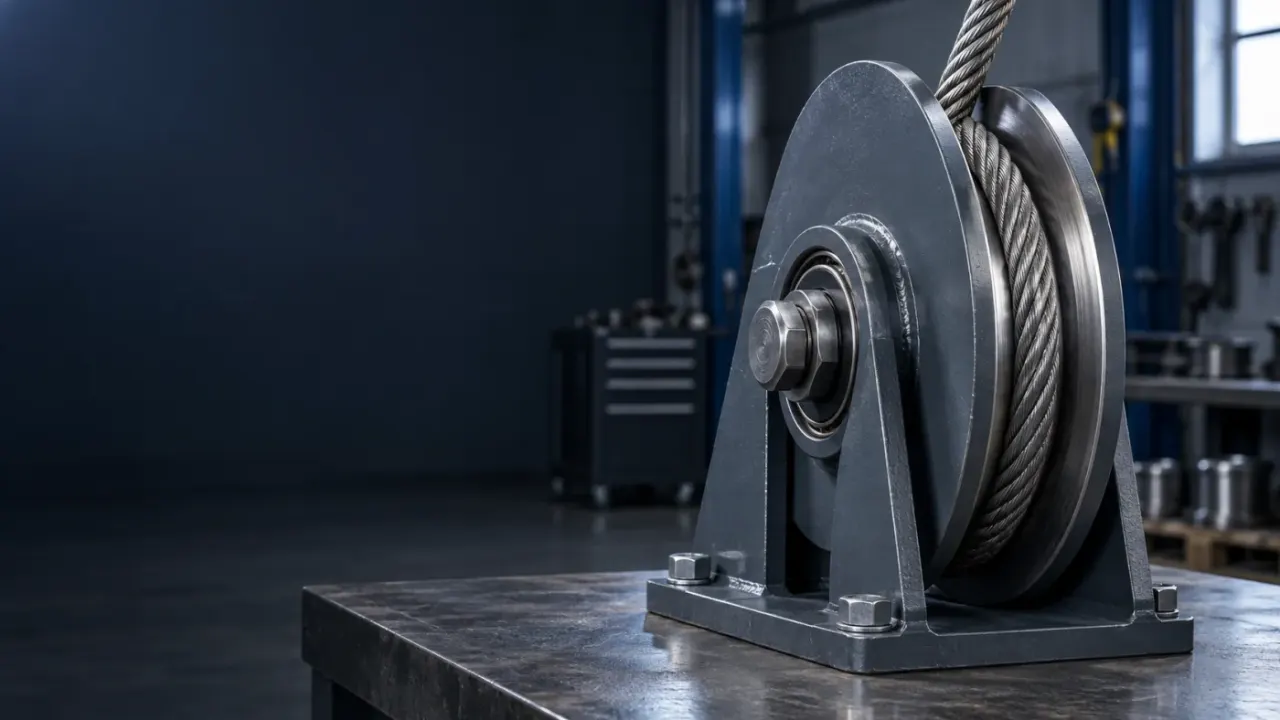
Lohar Forging handles hex bolt manufacturing enquiries in India for stainless steel, mild steel and specified high-tensile requirements. Select the dimensional standard, full or partial thread, material/property class and finish together. Send the required size and quantity, or share a drawing for custom production.
Dimension key
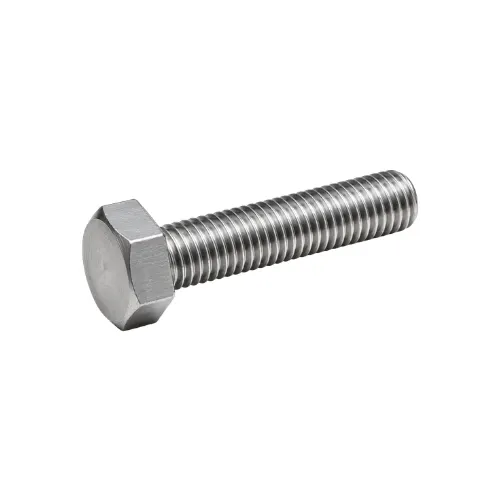
Read the hex bolts dimensions
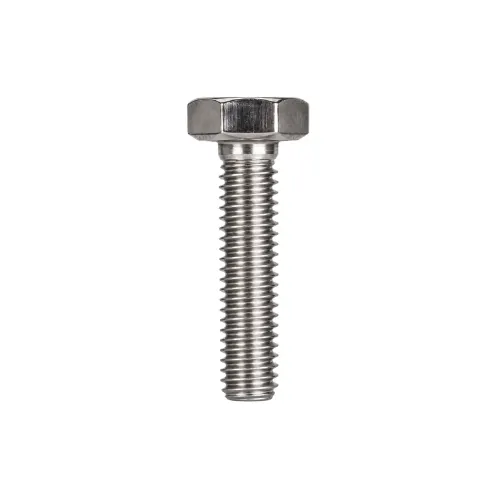
The diameter identifies the thread; pitch specifies spacing between threads. Under-head length l includes the threaded and plain-shank portions. Across flats s controls spanner fit, while head height k controls installation clearance. For partial-thread bolts, confirm that the plain shank and thread run-out suit the joint stack-up. A socket-head Allen screw uses a different head and drive standard.
Standard size reference
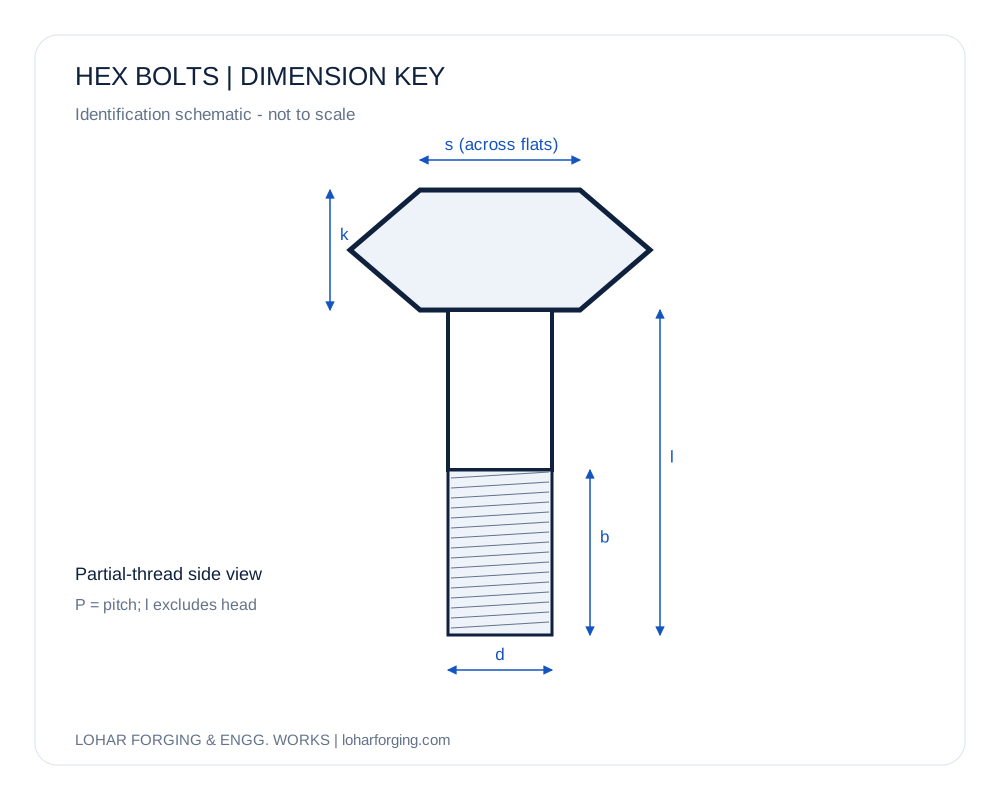
ISO 4014 hex bolt head and thread dimensions
Read the ISO head dimensions below with the named standard. Measure bolt length from the underside of the head, not including the head.
b is the reference threaded length of a partially threaded bolt and depends on total length l. A dash means that length band is not listed here. Fully threaded ISO 4017 screws must follow their own run-out and length requirements.
Dimensions are nominal reference values, not a stock list or a guarantee that every material/size combination is available. Specify the named standard and edition, material, finish and quantity in your enquiry. Manufacturing and inspection follow the agreed order or approved drawing.
Standard size reference
DIN and ISO spanner-size differences
DIN and ISO references are often used together in purchasing, but these head sizes are not interchangeable without checking the drawing.
A standard substitution can change the spanner size even when thread diameter and pitch stay the same. Confirm the installation clearance and specified standard.
Dimensions are nominal reference values, not a stock list or a guarantee that every material/size combination is available. Specify the named standard and edition, material, finish and quantity in your enquiry. Manufacturing and inspection follow the agreed order or approved drawing.
What should a hex bolt enquiry specify?
Lohar Forging manufactures hex bolts in Mumbai for machinery, fabricated assemblies, maintenance and project orders. A complete specification combines dimensional standard, thread size, length, material, property class and finish. Use the reference tables to identify dimensions; send a controlled drawing when the component differs from a standard pattern.
For example, an enquiry can identify M12 x 1.75, the required under-head length, full or partial thread, the exact ISO/DIN reference, grade, finish, quantity and destination. The same diameter can appear in different head geometries and strength classes.
Manufacturing, inspection and repeat-order control
Our Mumbai team reviews the required bolt form, material, dimensions, finish and quantity before confirming an order. For repeat batches, include the approved drawing revision or previous order reference so the inspection criteria remain consistent.
Agree the critical checks before production: thread gauge, under-head length, head geometry, coating condition, marking and any required material or mechanical-property reports. Ask for the scope of available documentation for the exact order rather than relying on a general quality badge.
Bolt configurations and joint fit
Different configurations suit different mechanical joints. Buyers should choose the product according to thread length, load path, bearing surface, material, installation space, and the governing engineering specification.
A conventional hex bolt works across machinery, equipment, fabrication, and general engineering, while a fully threaded design can help where the nut position varies along the shank. A partially threaded design may suit assemblies where engineers want the smooth portion to carry shear in the joint.
Engineers may also specify a hex head bolt for standard mechanical assemblies or head bolts for equipment-specific requirements. Metric hex products appear widely in modern engineering, with common sizes such as M6, M8, M10, and M12.
Buyers should always follow the approved drawing because two visually similar items can use different dimensions, strengths, or tolerances. Engineers should also check available tool clearance, joint thickness, washer arrangement, access for tightening, and future maintenance needs.
Certain projects require steel hex bolts with defined finishes and strength classes. The best hex selection depends on load, mating components, installation method, service environment, and maintenance expectations.
A high-quality hex product should fit accurately and support repeatable tightening without creating avoidable assembly problems.
Flange bolts use an integrated bearing flange beneath the head. In suitable assemblies, this geometry can distribute pressure across a wider area and may reduce the need for a separate washer when the engineering design permits it.
Automotive, equipment, fabrication, and machinery projects often use this arrangement where space and bearing area matter.
A conventional six-sided hex head remains practical because technicians can install it with standard sockets and spanners. Engineers should compare bearing surface, clearance, tool access, strength class, joint design, and governing specification before replacing one configuration with another.
When buyers review hex bolts fasteners, they should avoid treating every product as interchangeable. The phrase also relates to wider bolts fasteners procurement requirements, but small dimensional differences can change clamp load, clearance, seating, and service behaviour.
Designers should also consider the bearing surface, mating face, and tightening method because these factors influence how the joint develops and retains clamping force.
Hex bolt materials, property classes and matching nuts
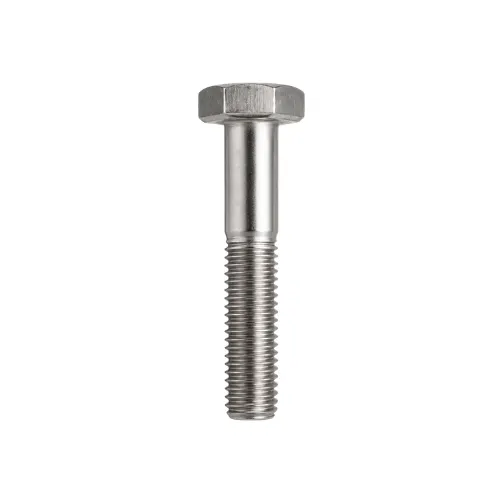
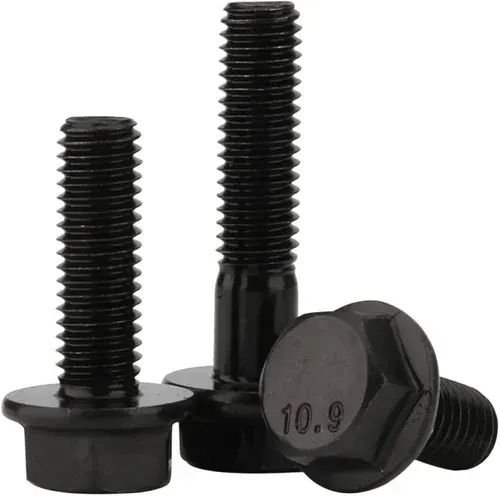
Specify carbon or alloy steel by its applicable material specification and mechanical property class. Stainless steel needs its own grade/property designation; an A2/A4 stainless choice is not a substitute description for carbon/alloy class 8.8 or 10.9.
For pressure-service bolting, ASTM A193 identifies bolting material specifications and grades such as B7 or B7M; ASTM A194 identifies matching nut specifications and grades such as 2H or 2HM. These are different components. Confirm exact class, size scope, service and documentation with the order.
Review corrosion exposure, temperature, lubrication and coating before selecting a grade. Stainless assemblies may need galling control; coating and thread allowances affect nut fit. A higher nominal strength class does not by itself establish a suitable joint.
Which standard controls which hex bolt requirement?
ISO 4014 covers a partially threaded hexagon-head bolt pattern; ISO 4017 covers a fully threaded hexagon-head screw pattern. Legacy DIN 931 and DIN 933 references remain common in enquiries, but some head widths differ from ISO dimensions. Use the standard and edition named on the approved drawing.
Dimensional standards, mechanical-property standards and material specifications serve different purposes. ISO 898-1 addresses specified carbon/alloy-steel fastener mechanical properties; ISO 3506-1 addresses specified corrosion-resistant stainless fasteners. A quality-management-system certificate does not assign a product grade or a lifting rating.
References: ISO 4014; ASTM A194 nuts. Confirm scope and edition for the component you order.
Thread and dimensional selection
The thread controls how the component engages with a nut or tapped hole, so buyers should specify diameter, pitch, tolerance, and usable length accurately.
A mismatch can create poor fit, cross-threading, uneven load transfer, or premature damage even when the overall diameter appears correct.
Projects may use metric, UNC, UNF, BSW, BSF, or another system. The drawing should identify the required form and mating part.
Engineers should also consider shank length, head dimensions, coating thickness, washer compatibility, and installation torque when defining the complete joint.
A hex bolt in India may serve machinery, plant maintenance, infrastructure, or bolts used for construction materials. In every case, the approved specification should control selection rather than a generic catalogue description.
Accurate information improves interchangeability and reduces installation delays. Procurement teams should avoid copying dimensions from an old sample unless engineering has approved that sample as the master reference.
Manufacturing and inspection
Manufacturers typically create industrial bolts through a controlled sequence that includes material preparation, forming or heading, thread creation, heat treatment where required, finishing, inspection, and packing. The exact production route depends on size, material, strength class, quantity, and specification.
Good bolt manufacturing starts with premium raw materials, an approved specification, and a controlled production route.
Depending on the product, the process may include cutting, heading or forging, machining, rolling, heat treatment, finishing, inspection, and packing. Each operation should control the characteristics that influence fit and performance.
A practical production sequence can include:
- Review the drawing and specification.
- Select and verify the required raw material.
- Cut the material to the planned blank length.
- Form or forge the bolt head.
- Create the required thread.
- Apply heat treatment when the grade requires it.
- Apply the specified coating or finish.
- Inspect dimensions, threads, surface condition, and relevant mechanical properties.
- Mark, pack, and prepare the products for dispatch.
The exact sequence can change according to the product and manufacturing method.
Quality teams may verify diameter, length, head geometry, gauges, surface condition, coating, hardness, and other specified mechanical properties.
Critical industrial fasteners may also require chemical verification, material certificates, traceability, or third-party inspection when the contract demands them.
A leading hex producer should control repeatability as carefully as initial production. Drawing revisions, material batches, inspection criteria, approved samples, and packing instructions need consistent management.
This discipline supports domestic business as well as export orders and helps procurement teams maintain stable quality over time.
Buyers can strengthen this process by agreeing on inspection points and acceptance criteria before production starts.
Industrial applications
Industrial teams use these products wherever a removable mechanical joint needs secure clamping, serviceability, and practical installation. Common sectors include machinery, construction, steel fabrication, infrastructure, automotive equipment, industrial plants, renewable energy, utilities, and maintenance operations.
Manufacturers use them in frames, machine structures, brackets, supports, guards, equipment bases, and serviceable assemblies.
Maintenance teams value bolted joints because technicians can dismantle components for inspection, replacement, adjustment, or repair.
Projects use construction materials for projects that often require engineered fastening systems for fabricated steel, supports, equipment installation, structural assemblies, and associated infrastructure.
The correct product depends on the approved engineering specification rather than on appearance alone.
Power plants, process facilities, steel plants, cement plants, petrochemical projects, material-handling systems, and heavy machinery can require products in different materials, dimensions, grades, and finishes.
The joint designer should evaluate tension, shear, vibration, temperature, corrosion, installation torque, and maintenance conditions before finalising the specification.
Manufactured in Mumbai for domestic and export enquiries
Send the delivery destination, packing requirements and required documents with the bolt schedule. Lohar Forging & Engg. Works lists its manufacturing/enquiry operation in Mazgaon, Mumbai and publishes its Government of India IEC record.
For export orders, confirm the destination specification, units, marking, certificates and packing before manufacture. Delivery time and minimum quantity depend on the agreed size, grade, finish and batch; obtain these in the quotation.
Hex head bolt or socket-head Allen screw?
A hex head bolt accepts an external socket or spanner. A socket-head Allen screw uses an internal hex drive and a different head geometry. They do not share the same head-dimension table.
If equipment clearance or access requires an Allen screw, use the socket-head product page and specify its own standard, diameter, length, grade and finish. Confirm any substitution against the equipment drawing.
Price and commercial evaluation
The fastest way to obtain an accurate quotation involves sharing a complete specification rather than asking only for a diameter and quantity. Manufacturers need enough information to identify material cost, production route, tooling, processing, inspection, finishing, packing, and delivery requirements.
Hex bolt price depends on size, material, grade, quantity, surface treatment, inspection, packaging, and delivery destination.
Standard products in common grades usually follow a different cost structure from special-alloy or drawing-based batches. Small quantities may also carry a higher per-piece cost because setup and inspection effort get spread across fewer components.
A price list can help buyers estimate standard items, but custom requirements need a project-specific quotation.
Material availability, heat treatment, coating, documentation, urgent production, special marking, and destination-specific packing can all influence the final commercial amount.
The lowest unit rate does not always create the lowest project cost. Poor fit, inconsistent dimensions, rejected assemblies, rework, or site delays can quickly erase a small purchasing saving.
Buyers should compare technical suitability, repeatability, documentation, delivery performance, and commercial value together.
For recurring requirements, annual volume commitments can also improve planning and reduce emergency purchases.
Before issuing a purchase order, teams should confirm size, material, grade, finish, quantity, testing, packing, destination, and the latest approved drawing.
They should identify whether the requirement covers standard industrial bolts in India or a special engineering component that needs additional production review.
Buyers should also state whether the order includes construction materials for projects, special coatings, traceability, certificates, or destination-specific packing.
Different materials can require different production and inspection routes, so the enquiry should separate standard items from specialised requirements instead of grouping everything under one description.
Bulk-order and RFQ checklist
For a faster and more accurate quotation, send:
- Product type
- Diameter
- Length
- Thread type and pitch
- Material
- Grade or property class
- Applicable standard
- Surface finish
- Quantity
- Technical drawing
- Inspection requirement
- Certificate requirement
- Packing requirement
- Delivery destination
- Required delivery schedule
For recurring requirements, maintain one controlled specification and document every revision.
This practice helps a manufacturer in India quote accurately, reduces repeated clarification, and improves consistency across batches.
It also gives the purchasing team a clearer basis for comparing quality, lead time, and total value.
Before release, engineering and purchasing should confirm that the purchase order, drawing, inspection plan, and packing instructions all show the same revision.
Hex bolt purchase checklist
- State diameter, pitch and under-head length.
- Choose full or partial thread and the required thread length.
- Name the dimensional standard and edition; check spanner clearance.
- Specify material/property class, matching nuts and finish separately.
- Attach the drawing for any custom geometry.
- Confirm inspection, documents, quantity, packing and destination.
Made to your approved requirement
Custom hex bolts: send your drawing or layout
For a custom part, email your drawing or layout to sales@loharforging.com, send it on WhatsApp, or call +91 98330 72266 to discuss the requirement. We confirm the drawing revision, material, finish, quantity and inspection scope before manufacturing. Custom dimensions come from your approved drawing; the reference tables below do not define a custom component.
- Diameter, pitch and under-head length
- Full thread or partial thread and required b
- ISO/DIN standard and edition
- Material or property class and matching nut
- Finish, quantity, destination and inspection documents
Company and order verification
Manufacturing information and documents
Product information is maintained by Lohar Forging & Engg. Works, Mazgaon, Mumbai. This page was updated on 14 November 2026 with standard-reference dimensions and ordering guidance.
See our company and manufacturing profile and inspection and documentation process. The company publishes Government of India IEC 0315056487; view the published IEC document. The scanned record is historical; confirm current company particulars and required documents with the sales team.
An IEC is an import/export registration, not a product test certificate. Request the applicable material, dimensional, coating or lifting documentation for your exact order. Confirm the scope and validity of any required quality-system certificate with the team.
Related hex bolts products and technical guides
FAQ
Hex Bolts: frequently asked questions
How do I choose a hex bolt manufacturer in India?
Check that the manufacturer can confirm the material and property class, thread and dimensional standard, finish and inspection documents for your exact size, and can supply the quantity you need on time.
What details are needed for a hex bolt quotation?
Diameter and pitch, length and thread length, material and property class, finish, applicable standard, quantity, delivery destination and any document requirements.
What does property class 10.9 mean?
The first number (10) indicates a nominal tensile strength of about 1,000 MPa, and the second (.9) means the yield strength is about 90% of the tensile strength. It is a high-tensile grade used where greater clamp load is needed.
Are full-thread or half-thread hex bolts better?
Neither is better in general. Full-thread bolts suit tapped holes and variable grip lengths, while half-thread bolts put the plain shank across the joint for shear loads and alignment.
Do DIN 931 and ISO 4014 always have the same head size?
No. Some diameters use different widths across flats, including M10, M12, M14 and M22. Order to the named standard and check spanner clearance.
Can I specify ASTM A194 as a hex bolt grade?
ASTM A194 covers nuts. Specify the bolt material specification and grade separately from the matching nut specification and grade.
What does the reference thread length b mean?
b is the threaded portion of a partially threaded bolt. The applicable value depends on the bolt diameter and overall under-head length band. Full-thread screws follow their own standard.
Explore related manufacturing and product ranges
- Eye bolt manufacturer in India
- U bolt manufacturer in India
- Industrial bolt manufacturer in India
- Stud bolt manufacturer in India
- Swivel lifting eye bolts
- SS shackle manufacturer in India
- Turnbuckles
- Wire rope pulleys
- MS shank hooks
- Foundation bolt manufacturer in India
- Nut bolt manufacturer in India
- D shackle and bow shackle manufacturer