
Fixed Eye Bolt vs Swivel Lifting Eye: Selection Questions
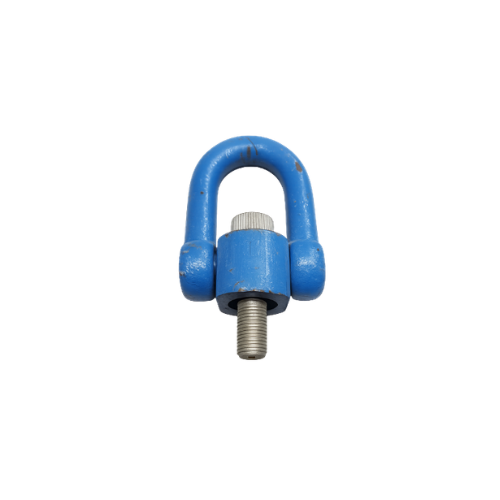
Quick Summary
A swivel lifting eye can align with permitted directions; a fixed eye has a different load path. Neither is safe without the exact rating and correct installation.
Table of Contents
A swivel eye is often suggested when a fixed eye looks awkward in the lift plan. That may be sensible, but “it rotates” is not the same as “it is approved for this lift.”
Start with the lift plan
Record total load, centre of gravity, number of points, sling angles and whether the load may rotate. The resulting force at each point can be higher than a simple equal share of the weight. The lifting engineer should define the required rated capacity and permitted load directions before choosing hardware.
Compare the mounting interface
Both types need a compatible base material, thread engagement and seating surface. A swivel assembly also needs space to rotate freely without striking the workpiece or nearby equipment. Check installation torque and locking instructions for the specific model; an eye that bottoms out or cannot seat correctly should not be used.
Read the product documentation
Ask for the exact model’s working load limit, allowed angles, marking, installation guidance and traceable test records. Do not transfer a fixed-eye rating to a swivel design, or assume a custom modification retains an original rating. The connected shackle, sling and other components must be assessed as one system.
Inspect before every lift
Look for damaged threads, deformation, corrosion, restricted rotation and missing markings. Stop and refer to the site lifting procedure when any component is uncertain. This is a selection guide for buyers, not a substitute for a competent lifting plan or product-specific instructions.
A practical example
A machine may have a tapped hole that accepts both a fixed and a swivel lifting eye. That dimensional fit is only the first check. If the sling pulls at an angle while the machine rotates, the lift engineer must compare the rated load directions and installation conditions for each exact model. A swivel design may solve an alignment problem, but it cannot correct an inadequate base or poor thread engagement.
Before you send the enquiry
Use this short check before you ask for price or delivery. It keeps the quotation tied to your actual engineering requirement.
- Required WLL and load directions
- Number of lifting points and sling angles
- Mounting thread and engagement depth
- Base material and seating surface
- Rotation and clearance envelope
- Applicable rating and certificate
- Quantity, marking and destination
Where to go next
Need product-specific manufacturing or supply information? Use the relevant buying page below, then send your controlled drawing and required document list.
External engineering reference: OSHA rigging equipment requirements (US). This is a research link, not a claim that every Lohar product is certified to the referenced standard. Confirm product-specific compliance in your purchase order.
Key Takeaways
- ▸A swivel lifting eye can align with permitted directions; a fixed eye has a different load path. Neither is safe without the exact rating and correct installation.
- ▸Start with the lift plan
- ▸Compare the mounting interface
Frequently Asked Questions
Does a swivel eye allow a lift from any angle?+
No. Use only the load directions and limits approved for that exact rated model.
Can a swivel eye replace a fixed eye without changes?+
Only after the mounting, clearance, load case, rating and installation are rechecked.