
Wire Rope Pulley Groove Wear: What to Inspect
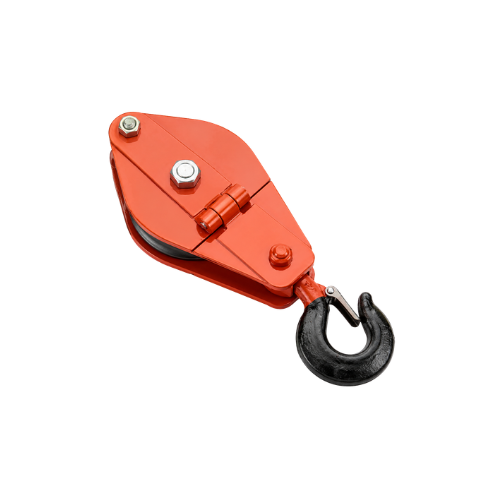
Quick Summary
A pulley groove must suit the rope and remain in good condition. Inspect groove profile, alignment, bearing movement and the complete load-carrying assembly.
Table of Contents
A pulley may still spin while wearing out the rope. The groove is the contact surface, so a visual check of the wheel alone is not enough.
Start with the rope specification
Record rope diameter, construction, operating load, speed and duty. The sheave groove and diameter should be selected for that rope and the equipment design. A replacement sheave with an identical outside diameter can still be wrong when its groove contour differs.
Look for contact and alignment problems
Uneven groove wear, sharp edges, polishing in the wrong place or abnormal rope damage can point to poor fit or misalignment. Fleet angle and the route of the rope through the equipment matter. A qualified maintenance person should compare observations with the equipment maker’s acceptance criteria.
Inspect the bearing and structure
Check that the bearing or bush moves as intended and that the axle, side plates and mounting show no distortion or damage. A sheave is only one part of a pulley block. For lifting service, the complete assembly needs a verified rating and the appropriate inspection records.
Write a useful replacement RFQ
Send the rope details, sheave drawing, groove profile, pitch diameter, bore, bearing arrangement and whether you need the wheel only or the full block. Include environment, quantity and required tests. This avoids receiving a part that fits the shaft but damages the rope.
A practical example
When a rope shows repeated damage near a pulley, replacing the rope alone may not solve the problem. Inspect the sheave groove, alignment and bearing before placing the next order. If a new pulley is needed, send the damaged component drawing and the rope specification together; the purchasing team should identify whether the quote is for a wheel, axle assembly or full block.
Before you send the enquiry
Use this short check before you ask for price or delivery. It keeps the quotation tied to your actual engineering requirement.
- Wire rope diameter and construction
- Sheave or complete pulley block
- Pitch diameter and groove profile
- Line pull, speed and duty cycle
- Bore, axle and bearing arrangement
- Finish, environment and maintenance
- Drawing, quantity and inspection documents
Where to go next
Need product-specific manufacturing or supply information? Use the relevant buying page below, then send your controlled drawing and required document list.
External engineering reference: OSHA rigging equipment requirements (US). This is a research link, not a claim that every Lohar product is certified to the referenced standard. Confirm product-specific compliance in your purchase order.
Key Takeaways
- ▸A pulley groove must suit the rope and remain in good condition. Inspect groove profile, alignment, bearing movement and the complete load-carrying assembly.
- ▸Start with the rope specification
- ▸Look for contact and alignment problems
Frequently Asked Questions
Can a pulley be selected by rope diameter alone?+
No. Groove, sheave diameter, load, speed, alignment, bearing and mounting all affect suitability.
Is a free-spinning pulley necessarily safe?+
No. Groove wear, structural damage and bearing condition still require inspection.